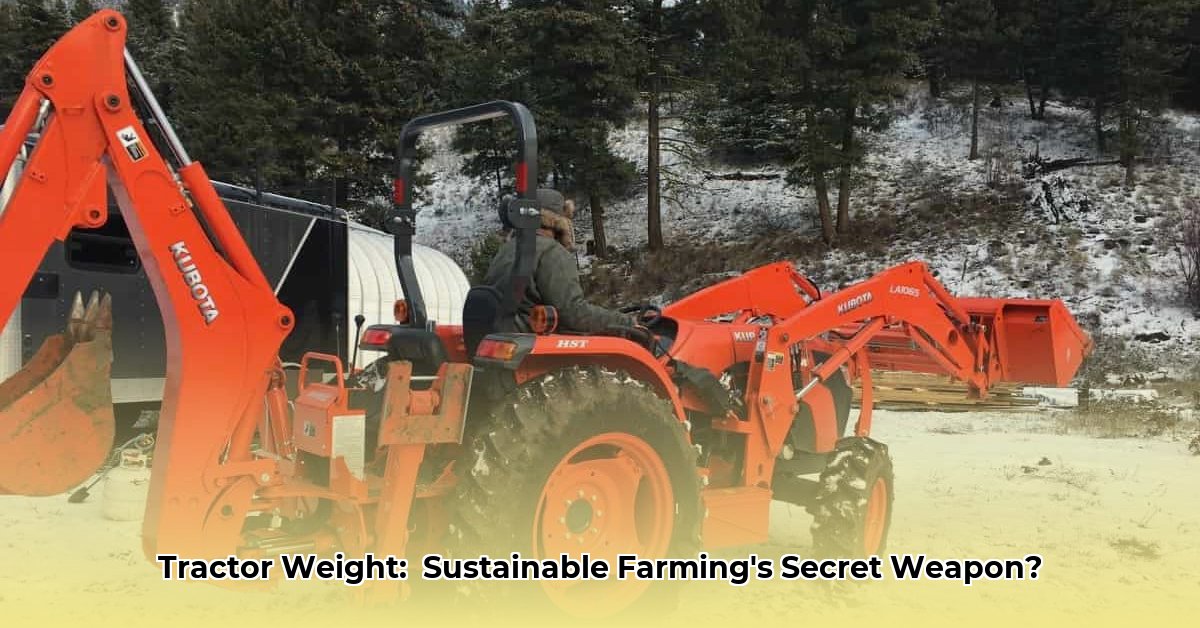
Choosing the right tractor is paramount for farm profitability and environmental stewardship. Tractor weight significantly impacts fuel efficiency, soil health, and overall farm sustainability. This guide helps you understand tractor weight's implications, compare models, and select the optimal weight for your specific farming operation. For more detailed information on tractor weights, see this helpful resource on tractor weights.
Understanding Tractor Weight and its Impact
Tractor weight is not arbitrary; it's directly related to power and stability. Heavier tractors, while offering superior traction and stability, especially in challenging conditions, consume more fuel and significantly compact soil. Soil compaction reduces water infiltration and root growth, negatively impacting crop yields and long-term soil health. The weight is determined by the engine, frame, features (like air-conditioned cabs), and added ballast for improved stability. Even models vary in weight due to optional features.
Quantifiable Fact: A large farm tractor can weigh several tons, significantly more than a smaller, backyard model. This impactful difference affects multiple aspects of your operation.
The weight of your tractor is a considerable factor in your farm's environmental footprint. A rhetorical question to consider is: Can higher yields outweigh the environmental degradation and long-term soil health concerns associated with heavier tractors?
Dr. Emily Carter, Soil Scientist at the University of California, Davis, states, "Soil compaction from heavy machinery is a significant contributor to decreased water infiltration and reduced nutrient availability, ultimately impacting long-term soil fertility and farm productivity."
Choosing the Right Tractor Weight: A Step-by-Step Guide
Selecting the right tractor is like finding the perfect shoe size – too big or too small leads to inefficiency. Here's a structured approach:
1. Assess Your Farming Style: Determine your primary tasks (crop cultivation, livestock management, etc.). Different operations demand varying levels of power and traction.
2. Understand Your Soil Type: Heavy clay soils are more susceptible to compaction than lighter, sandy soils. Consider your soil's type and its compaction susceptibility.
3. Optimize Tire Selection: Wider tires distribute weight more effectively, reducing ground pressure (like wider feet distributing weight more evenly). Consider tire width for optimal soil interaction.
4. Implement Sustainable Farming Techniques: Explore reduced-till or no-till farming to minimize soil disturbance. These practices lessen compaction and promote healthy soil structure.
5. Utilize Precision Agriculture Technology: GPS guidance enhances precision, minimizing passes and fuel consumption, resulting in reduced soil compaction. GPS precision significantly contributes to efficiency.
Expert Insight: "Employing precision agriculture techniques, such as GPS-guided tractors, can help farmers optimize their routes, minimizing passes over the field and thus reducing soil compaction," explains John Miller, Agricultural Engineer at Purdue University.
Stakeholder Impact of Tractor Weight
Tractor weight affects multiple stakeholders throughout the agricultural value chain:
| Stakeholder | Short-Term Impacts | Long-Term Impacts |
|---|---|---|
| Farmers | Fuel costs, soil health, operational efficiency | Crop yields, soil fertility, farm profitability, equipment longevity |
| Manufacturers | Design & production choices | Innovation in sustainable tractor design and manufacturing |
| Policymakers | Environmental regulations, farm subsidies | Farm sustainability policies, overall agricultural health |
| Researchers | Studying soil compaction and its effects | Development of sustainable practices, recommending optimized tractor choices for different soils |
Heavy vs. Light Tractors: A Comparative Analysis
Heavy Tractors:
Pros: Superior traction and stability; ideal for challenging conditions and heavy loads.
Cons: High fuel consumption; significant soil compaction; higher initial investment; increased equipment wear and tear.
Light Tractors:
Pros: Lower fuel consumption; reduced soil compaction; lower initial cost; easier maneuverability.
Cons: May lack sufficient traction and power for heavy-duty tasks or difficult terrain; may not suit all farming operations.
The optimal tractor weight is a balance between operational efficiency and environmental responsibility. It's about finding the sweet spot that maximizes yield while minimizing environmental impact.
Minimizing Soil Compaction: Practical Strategies
Soil compaction is a significant issue. The first pass of a heavy tractor inflicts the most substantial compaction damage. Mitigation strategies require a multi-pronged approach:
1. Tire Management: Lower tire pressure and wider tires distribute weight more effectively, reducing compaction.
2. Controlled Traffic Farming (CTF): This technique involves carefully planning routes to minimize soil disturbance. CTF significantly reduces the impacted area of soil compaction.
3. Cover Crops: Planting cover crops improves soil structure and reduces compaction. Cover crops create pathways for better root penetration.
4. Machinery Selection: Track systems offer a much larger contact area than tires, further minimizing compaction. However, consider the economic implications when weighing this option.
5. Optimal Timing: Avoid working fields when soil is wet, as wet soil is more susceptible to compaction.
Regular soil testing is crucial for monitoring compaction levels and the effectiveness of your mitigation strategies. Remember that soil health is an iterative process requiring continuous monitoring and adaptation. The long-term benefits of reduced compaction outweigh the initial investments (such as wider tires or track systems).